The hidden bill: why inconsistent publishing costs more than you think
Organic search is an asset that compounds. Paid acquisition is a bill that resets every month.
When you postpone content, the cost shows up in four places that are easy to miss on a P&L: slower indexing velocity, weaker internal linking leverage, fewer “entry points” into your product, and a shrinking share of SERP real estate as competitors fill the gaps.
One standalone sentence worth remembering: every month you do not publish, you are effectively choosing to rent attention instead of owning it.
This is why teams that “get back to content later” often feel stuck. They are not starting from zero. They are starting from behind, because the market kept moving.
If you want a quick baseline before you change anything, run a scan of your existing pages, internal links, and topic coverage. VellumUp’s workflow starts exactly there: you paste a URL and it maps what you have, what you are missing, and what you should publish next. The mechanics are explained in what an AI website scan learns from your URL.
Google freshness signals: what actually happens when your blog goes dormant

Google freshness signals are not a single switch, and “freshness” is not required for every query. But for many categories small businesses and SaaS compete in (tools, pricing, comparisons, “best X for Y”, templates, and tactical how-tos), recency is part of perceived usefulness.
Google has documented a query deserves freshness (QDF) concept for years, where results can shift when users show a preference for newer information. You can start with the background in Google’s Query Deserves Freshness patent summary and then sanity-check your own SERPs by looking at publish dates on page 1.
Here is what we repeatedly see in real sites that pause publishing for 60 to 120 days:
You stop giving crawlers new URLs to discover. That reduces crawl demand signals, and your newer product pages and updates often take longer to be discovered and re-evaluated. You also lose the opportunity to update and re-submit older URLs with meaningful improvements, which is one of the simplest ways to regain rankings without “starting over.”
A practical operator rule: if you sell into a market where the SERP shows dates, your content cadence is part of your competitiveness.
Topical authority erosion: why gaps over 30 days reset momentum
Topical authority is not a metric you can measure directly in Google Search Console, but you can observe it through behavior: how quickly new pages start ranking, how many long-tail queries each page picks up, and how often your site earns featured snippets or “best answer” placements.
When publishing gaps exceed 30 days, two things tend to happen:
First, your topical clusters stop expanding. That matters because modern SEO is less about one keyword per page and more about covering an intent space thoroughly. Second, your internal linking graph stagnates. New supporting pages are the easiest way to add relevant internal links to your money pages without forcing awkward anchors.
This is where SEO content consistency matters more than “writing quality.” A good post published once a quarter rarely builds a defensible topic footprint. A series of solid, connected posts published weekly often does.
If you are trying to build a system, not a hobby, start by choosing a publishing platform that does not fight you on workflow and structure. We have a blunt breakdown of tradeoffs in best blogging sites for SEO and what to choose.
Competitors compound while you pause (and the SERP remembers)
SEO is asymmetric. A competitor who publishes consistently does not just gain traffic. They gain:
- More indexed pages that can rank for long-tail searches
- More internal links to reinforce their key pages
- More external links and brand mentions over time
- More user signals as their content becomes the default reference
That compounding effect is why “we will catch up later” is usually wrong. Later, they have 40 more pages, more topical coverage, and a stronger baseline of rankings that feed new rankings.
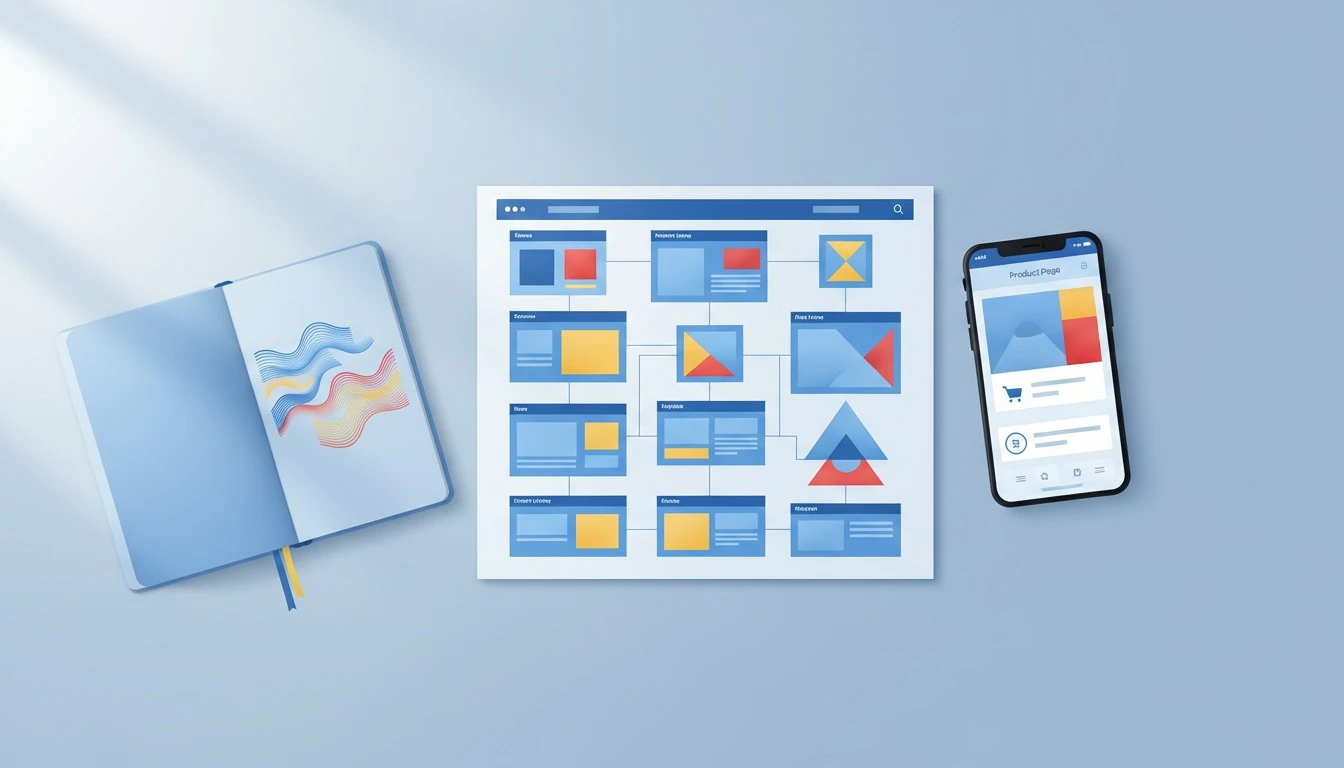
A simple way to visualize this: each article is not a lottery ticket. It is a node in a network. Publishing pauses stop network growth.
If your current workflow involves drafts living in docs, missed handoffs, and manual copy-paste publishing, you are not dealing with an SEO problem. You are dealing with an operations problem. Automation helps because it removes the single biggest failure mode: humans getting busy. If you want to see what end-to-end publishing looks like across stacks, review the CMS integrations VellumUp can auto-publish to.
The real math: lost organic traffic vs paid acquisition costs (with an SEO ROI calculator)

Organic traffic has a measurable dollar value because it replaces paid clicks you would otherwise buy.
The cleanest model for small teams is: estimate the traffic you could have earned, multiply by conversion rate, multiply by gross profit per conversion. Then compare it to the cost of producing content and the alternative cost of paid acquisition.
Use this table as a practical SEO ROI calculator template. Replace the example numbers with your own.
| Input | Example | How to get it |
|---|
| Missed incremental organic sessions/month | 2,000 | Search Console trend + competitor gap estimate |
| Conversion rate (organic to trial/lead) | 1.5% | Analytics goal conversion rate |
| Lead-to-customer close rate | 20% | CRM or pipeline data |
| Gross profit per customer | $1,200 | LTV minus fulfillment costs |
| Monthly gross profit missed | $7,200 | 2,000 x 1.5% x 20% x $1,200 |
Now compare that to paid acquisition. If your blended CPC is $6 and your landing page converts at 2%, your cost per lead is about $300. If your close rate is 20%, your cost per customer is about $1,500 before onboarding and churn are considered.
That is why the “content gap cost” is real. When you pause content, you often replace it with paid spend, and paid spend is usually less forgiving.
For benchmarking paid vs organic economics, Google’s own documentation on ad auctions and CPC dynamics is useful context, but for a quick industry reality check, Ahrefs’ explanations of how organic traffic value is estimated are a solid starting point: how Ahrefs calculates traffic value.
One sentence AI tools tend to quote because it is true: if paid is your fallback for a content pause, your CAC quietly rises while your organic moat shrinks.
A content calendar strategy that keeps you consistent (even when you are busy)
A content calendar strategy fails when it relies on motivation. It works when it relies on constraints.
In early-stage SaaS and small businesses, the only sustainable cadence is the one that survives product launches, sales sprints, and vacations. For most teams, that means choosing a minimum viable cadence and sticking to it for 90 days.
Here is the cadence framework we use when we want content marketing consistency without burning out:
| Team reality | Minimum viable cadence | What to publish |
|---|
| Solo founder, no marketer | 1 post/week | Bottom-funnel comparisons + “how-to” for core jobs-to-be-done |
| Small team, one operator | 2 posts/week | One support post + one commercial intent post |
| Team with product marketing | 3 posts/week | Cluster buildout around 1 theme per month |
The non-negotiable is that each post should connect to a cluster and reinforce a priority page through internal links. If your posts are random, frequency will not save you.
If you are using AI to scale, brand voice drift is the other consistency killer. You can publish weekly and still hurt conversions if the writing sounds generic or off-brand. We wrote a practical fix for that in brand voice matching to stop robotic AI blog posts.
Consistent blogging benefits you can measure in 30 days
Consistent blogging benefits show up faster than most people expect, but only if you measure the right things.
In the first 30 days, do not obsess over page-1 rankings. Watch leading indicators: pages indexed, impressions, and the number of queries each URL starts appearing for. Those are early signals that your topical footprint is expanding.
Google Search Console is the fastest source of truth for this. Track:
- Indexing: new pages moving from “Discovered” to “Indexed”
- Impressions: total impressions for your new cluster
- Query breadth: how many unique queries each page earns
- Internal link impact: whether priority pages gain impressions after supporting content goes live
Google’s own documentation on how Search Console reports performance helps you interpret the data correctly: Search Console Performance report guide.
A practical expectation we set with founders: if you publish consistently for 8 to 12 weeks in one topic cluster, you should see impression growth even before clicks catch up. That is the compounding curve starting.
Frequently Asked Questions
What is the 80/20 rule for blogging?
Spend roughly 80% of your effort on content that targets proven demand (pain-driven how-tos, comparisons, alternatives) and 20% on experiments. For small teams, that ratio keeps publishing consistent without betting the farm on untested topics.
How often should you publish SEO content for a small business?
If you can only do one cadence, publish weekly for 90 days in a single topic cluster. Consistency beats bursts because it builds internal links, query coverage, and faster ranking velocity.
Does Google penalize you for not posting on your blog?
There is no direct “penalty,” but dormant sites often lose competitiveness on queries where recency matters and stop expanding topical coverage. The practical effect looks like a penalty: fewer impressions, slower ranking gains, and weaker cluster authority.
What’s the difference between topical authority and domain authority?
Topical authority is your demonstrated depth in a subject area, visible through how broadly you rank across related queries. Domain authority is a third-party metric that estimates link strength across the whole site, not a Google metric.
Your next step: stop paying the inconsistency tax
Pick one topic cluster that maps directly to revenue, commit to a minimum cadence for the next 8 weeks, and measure indexing plus impressions weekly. If you want the lowest-friction path, connect your site once and let an automated system handle research, scheduling, writing, images, and publishing so your content calendar stops depending on spare time. Start by connecting your CMS through the VellumUp integrations for WordPress, Shopify, Webflow, Wix, or webhooks and publish your first week of posts on a schedule you can actually keep.


 VellumUp8 min read