AI Essay Writer Free: Best Use Cases by Assignment
AI Essay Writer Free: Best Use Cases by Assignment
VellumUp7 min read
walter writes ai is useful when you treat an AI essay writer free tool as a drafting partner, not a shortcut. The best use cases are fast outlines, multiple thesis options, sentence-level rewrites, and revision checklists across common assignments like argumentative, narrative, and research essays. This guide shows exactly what to ask for, what to verify, and what to avoid so your work stays accurate and yours.
What an AI essay writer free tool is actually good for (and what it is not)
An AI essay writer free tool is best at structure and language, not truth. It can turn a prompt into an outline, suggest angles, generate topic sentences, and help you revise for clarity. It is not reliable as a source of facts, quotes, or citations.
If you remember one rule, make it this: use AI to shape your thinking and writing, then verify every claim that matters. Hallucinated sources are real, and they can tank a grade fast.
Google’s own guidance is clear that quality matters more than how content is produced, and that aligns with academic expectations too: originality, accuracy, and usefulness win. For the SEO side of this same issue, we’ve documented the exact patterns that hurt trust in AI Writing Mistakes That Hurt SEO and Trust.
A practical way to stay safe is to split tasks:
Use AI for outlines, transitions, and rewrites.
Use your course materials, library databases, and primary sources for evidence.
Argumentative essay: best free AI essay writer use cases that improve your argument
An argumentative essay is where a free essay generator helps most with positioning and logic. The hard part is not writing sentences. It is building a defensible claim, anticipating objections, and keeping paragraphs tight.
Here are the highest-ROI ways to use an ai writer free tool for an argumentative essay:
First, generate three thesis options with different levels of strength. Ask for one cautious thesis, one balanced thesis, and one bold thesis. Then choose the one you can actually support with evidence you have.
Second, ask for a counterargument paragraph plan. A strong argument shows it understands the other side. AI can propose common objections you might miss, then you decide which ones are fair and how to answer them.
Third, use AI as a coherence checker. Paste your draft and ask: “List any claims that lack evidence, any logical leaps, and any paragraphs that do not connect to the thesis.” This is where an ai writing assistant can act like a strict editor.
Standalone takeaway: The fastest way to improve an argumentative essay is to tighten the link between thesis, topic sentences, and evidence.
Narrative essay: use AI for scenes, pacing, and voice without losing authenticity
A narrative essay lives or dies on specific detail and flow. AI cannot remember your lived experience, but it can help you tell it better.
Start by using AI for a story spine: setup, inciting moment, turning point, reflection. If you already have a rough draft, ask for a pacing diagnosis: “Where does the story drag? Where do I jump too fast? Which moment deserves more sensory detail?”
Then use an ai story generator style prompt carefully: not to invent events, but to generate alternative ways to describe what happened. For example, ask for five versions of a single paragraph with different tones (reflective, humorous, tense). Pick what matches your voice.
If you feel your draft sounds robotic after revisions, do not “humanize” it by adding fluff. Instead, add concrete nouns and verbs: what you saw, what you did, what changed.
A quick test we use when editing: if a paragraph could apply to anyone, it is too generic. Replace it with one detail only you could write.
Research essay: outlines, research questions, and revision support (not fake citations)
A research essay is where free AI tools can do the most damage if misused. The risk is fabricated citations, invented statistics, and confident-sounding nonsense.
Use AI for research framing, not sourcing. A strong workflow looks like this:
Ask for 5 to 10 research questions that fit your prompt and word count.
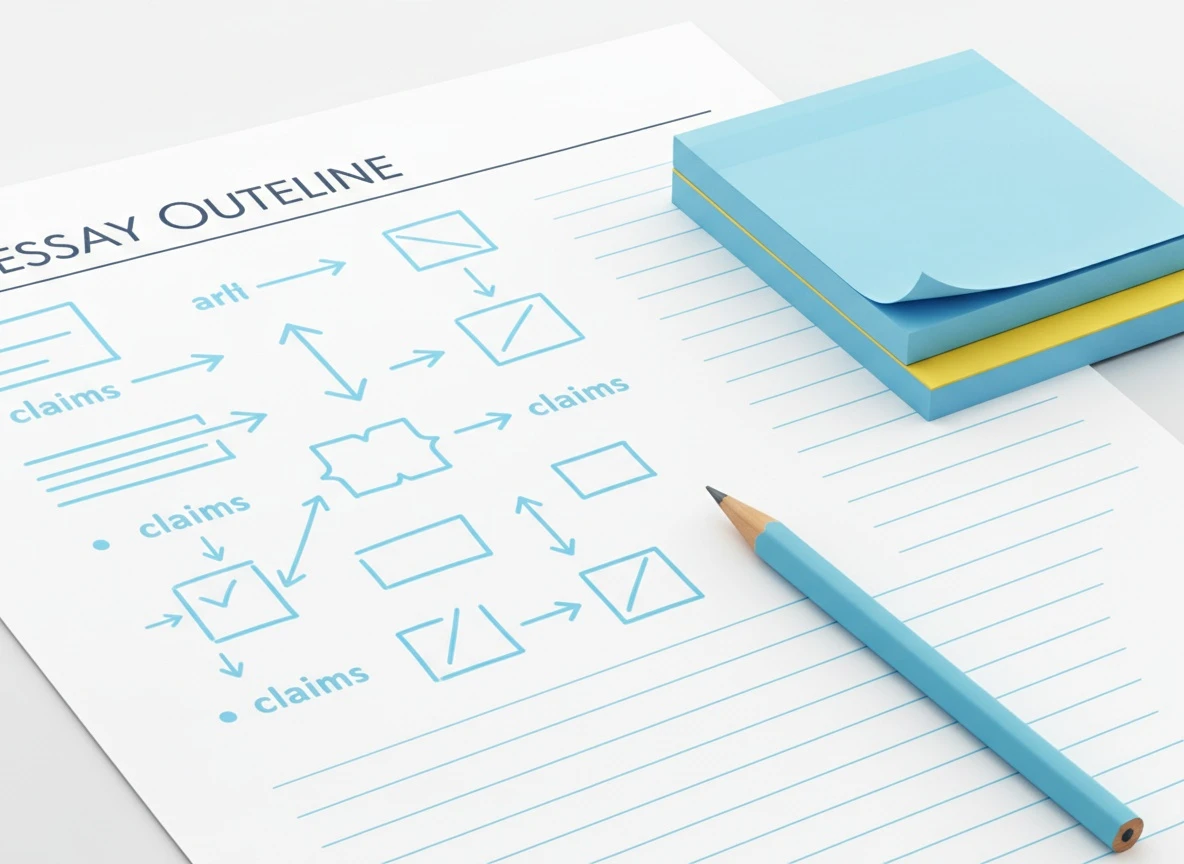
Pick one question, then ask for an outline with sections that match how research essays are graded: background, claim, evidence, analysis, limitations.
After you collect real sources, ask AI to help you integrate them: “Given these notes, suggest where each source fits in the outline and what each paragraph should argue.”
When you need real evidence, pull it from credible databases and official sources. For example, the Purdue Online Writing Lab has clear guidance on integrating sources and avoiding plagiarism in academic writing: see Purdue OWL’s plagiarism resources.
Standalone takeaway: Never ask a free essay generator to “add citations.” Ask it to format citations for sources you already verified.
Thesis options, sentence rewrites, and revision checklists (the “quiet wins”)
Thesis generator prompts are the easiest way to get unstuck. A good thesis is specific, arguable, and scoped to the assignment length. If your thesis has words like “many,” “a lot,” or “in society,” it is probably too broad.
Sentence-level tools are where AI shines. Use a sentence generator or ai sentence generator to:
Rewrite wordy sentences into clean, direct ones.
Fix inconsistent tense and point of view.
Create smoother transitions between paragraphs.
Here is a simple table we use internally when deciding what to ask AI to do, versus what a human must do.
Responsible use: plagiarism, AI detection, and what “good” looks like to graders
Do publishers and instructors check for AI writing? Yes, many do. Detection is inconsistent, but policy enforcement is real. The bigger issue is not detection scores. It is whether the writing shows genuine understanding, accurate evidence, and original analysis.
A common question is: is 20% AI detection bad? In practice, a percentage does not tell you what matters. Some tools flag common phrases and academic boilerplate. What gets students in trouble is submitting AI-generated content as if it were their own thinking.
A clean standard to follow:
AI can help you draft and revise.
Your final submission should reflect your reasoning, your sources, and your phrasing choices.
If your institution requires disclosure, disclose.
For a grounded overview of how AI text generation works and why it can sound plausible while being wrong, Wikipedia’s explanation of large language models is a useful starting point.
Frequently Asked Questions
Do publishers check for AI writing?
Yes, many publishers and schools use a mix of policy checks, human review, and sometimes detection tools. The safest approach is using AI for drafting and revision while keeping your claims, sources, and analysis genuinely yours.
Does Walter write pass AI detection?
No tool can promise that, and you should not chase detection scores. Focus on accuracy, clear reasoning, and a personal voice, and always follow your institution’s rules.
Is 20% AI detection bad?
A percentage alone is not a verdict. What matters is whether the work is original, properly sourced, and demonstrates real understanding rather than generic filler.
What is the content machine?
A content machine is a repeatable system that plans, writes, and publishes content consistently, usually with templates, automation, and internal linking. The goal is predictable output without sacrificing quality. Start with one assignment and use AI in a controlled way: generate a tight outline, pick a thesis you can defend, and run one revision pass focused on clarity. If you are done fighting with inconsistent drafts and you want automated publishing for real SEO growth, create your workspace at VellumUp registration and turn your site into a content engine.
Where VellumUp fits if you are building a “content machine” (not just one essay)
A lot of people searching walter writes ai are really asking a bigger question: “How do I scale writing without losing quality?” That is the same problem website owners face with blogs, help centers, and landing pages.
VellumUp is built for that. You connect your site, it learns your voice, plans topics, writes, and publishes on schedule with internal links already handled. If you care about automation, the fastest path is to start with the right CMS connection. See the full list of website publishing integrations for WordPress, Shopify, Webflow, Wix, and webhooks.
If your goal is consistent publishing, not one-off drafts, automation beats hustling with random free tools every week.


 VellumUp7 min read